What Happens When Universities and Ecosystems Collaborate? A Look Inside UCL SustainTech
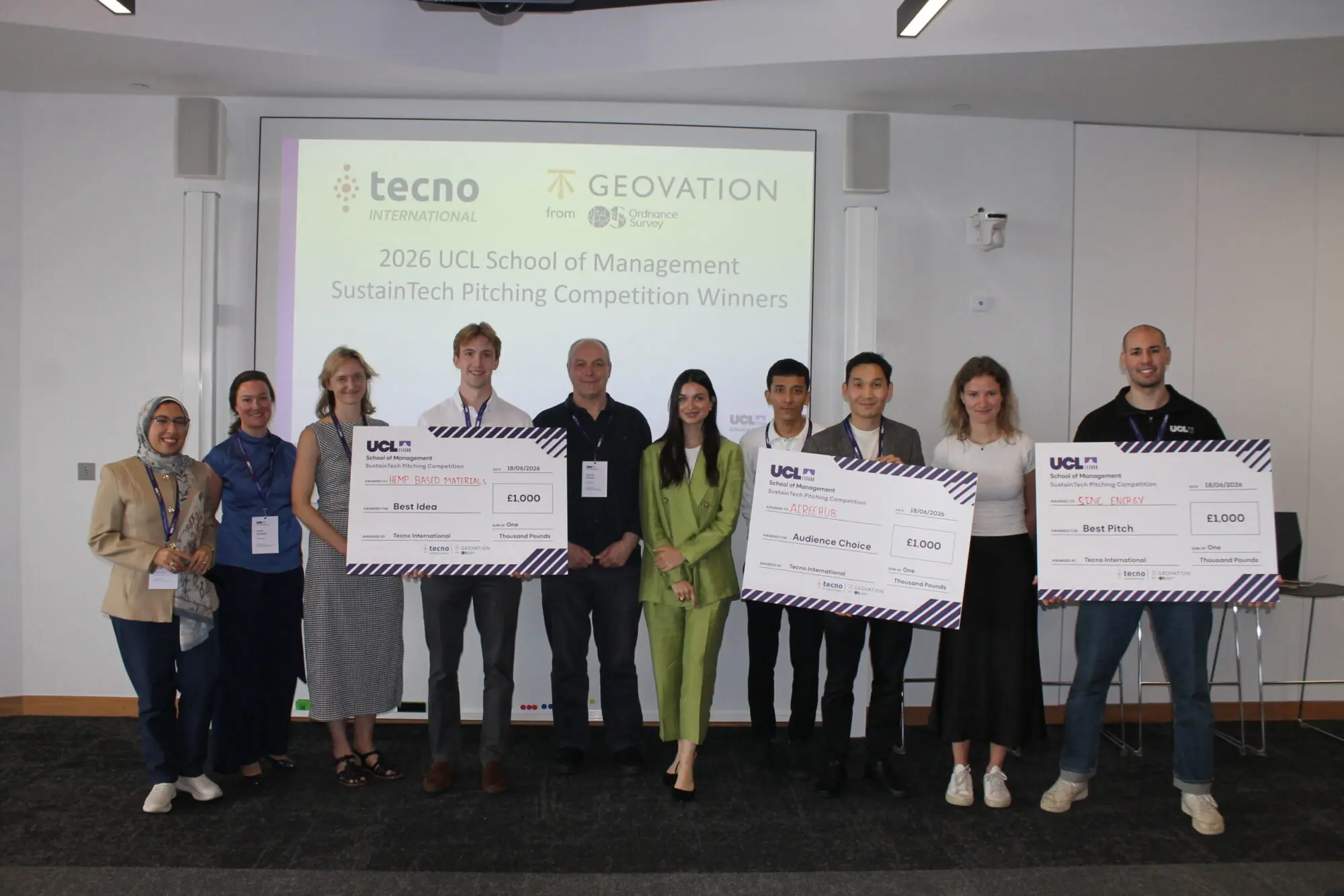
Not all startup competitions end when the pitches finish.
At the UCL SustainTech Pitching Competition, something bigger is happening – a collaboration designed to connect early-stage innovation with real-world support, networks and momentum.
And that’s exactly where Geovation comes in.
Creating a space for sustainable innovation
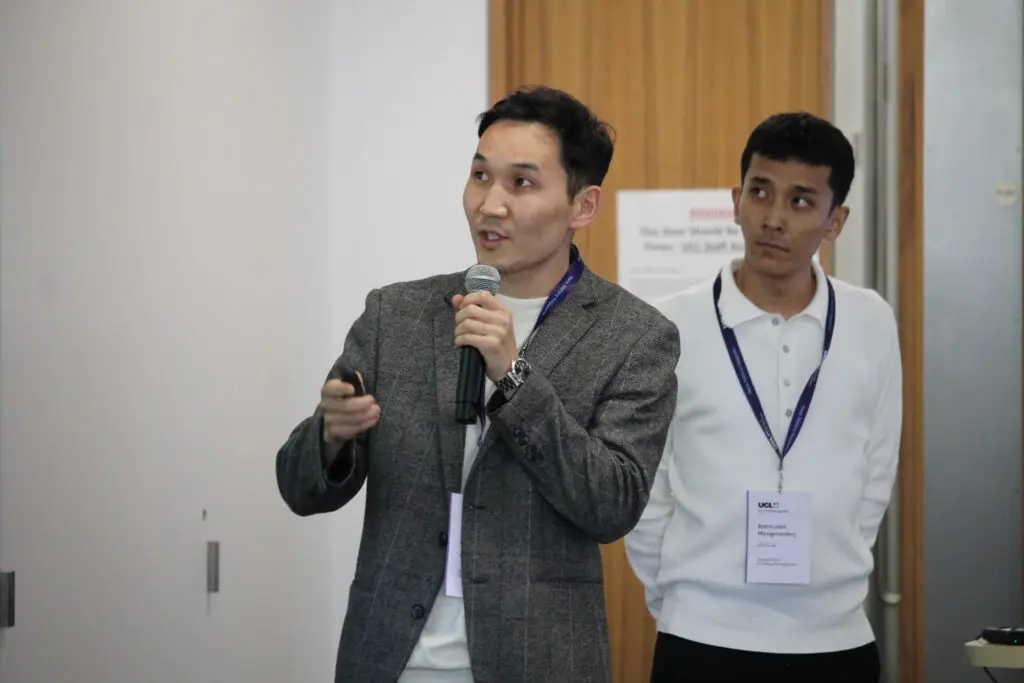
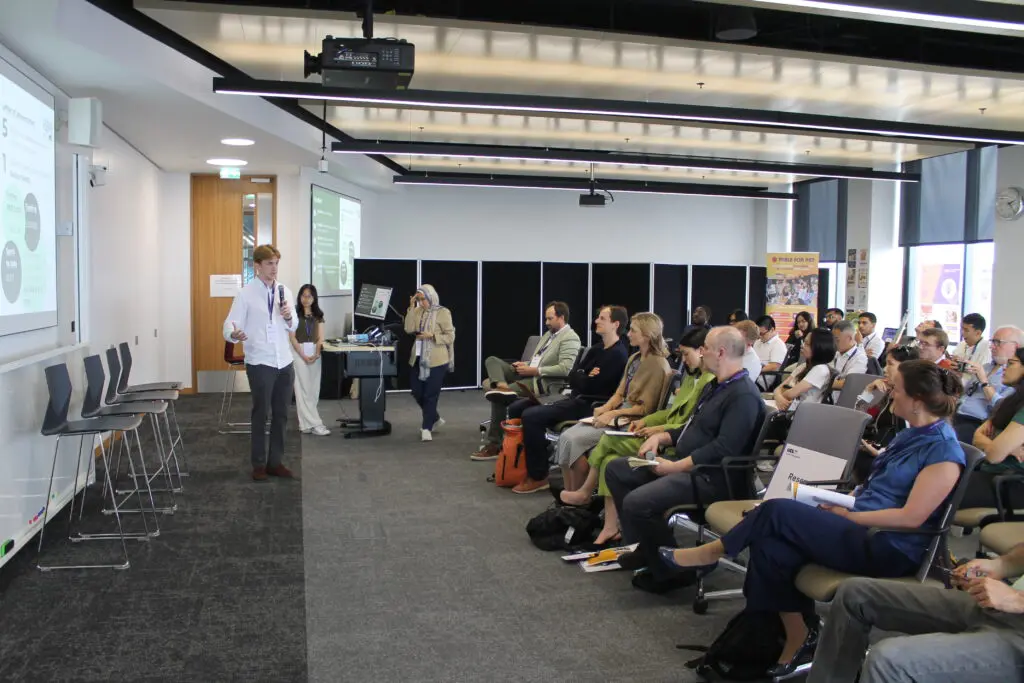
Hosted by the UCL School of Management, the SustainTech Pitching Competition has become a platform for emerging entrepreneurs looking to develop solutions that respond to some of today’s most pressing environmental and societal challenges. Each year, a cohort of finalists is selected to present their ideas to a panel of experts, sharing not just what they are building, but why it matters.
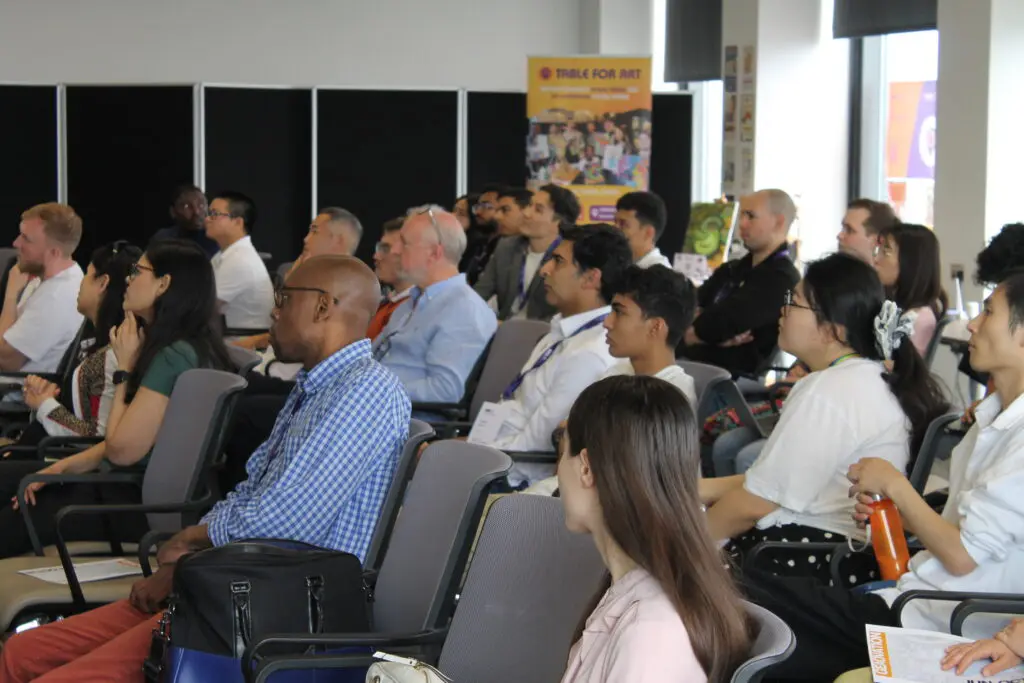
This year’s competition, held in Canary Wharf, brought together a diverse group of founders working across sustainability, innovation and entrepreneurship. From early-stage ideas to more developed ventures, the common thread was a clear ambition to create meaningful change.
Startup Snapshot:
- Hemp based materials – Panels for buildings made from hemp-based products.
- Rxcycle – Recycling unused NHS medical supplies including pharmacies.
- Farmona shield – Prediction for farmers in Africa to protect their livestock from climate problems such as drought.
- Greentask.ai- A verification tool for carbon credits to stop greenwashing.
- Eco brick – Brick made from plastic for non-loading bearing walls.
- Chitotrap – Filtration to collect microplastics.
- Airee hub – Regenerative filtration using lambs wool.
- Sinc energy – Heating system designed for secondary schools which links to their timetable.
- Table for Art – Bringing artists and empty spaces in cafes etc together to attract consumers for art workshops.
- Reclaim – Recycling of building material including bricks.
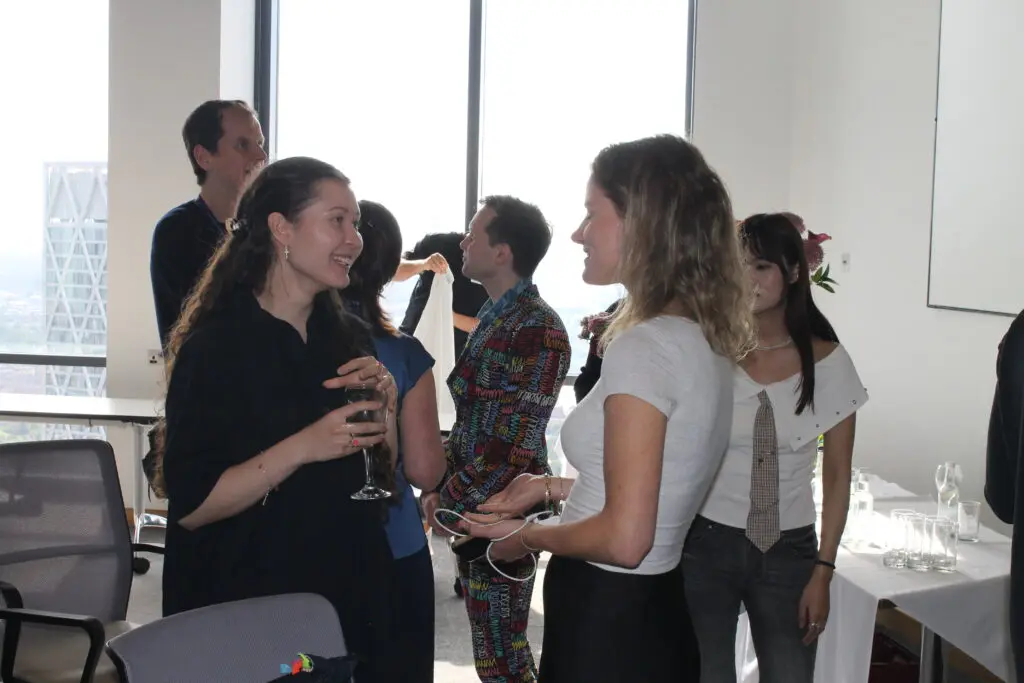
Beyond the competition itself, the event creates space for connection – with a networking reception bringing together students, alumni, founders and partners from across the ecosystem.
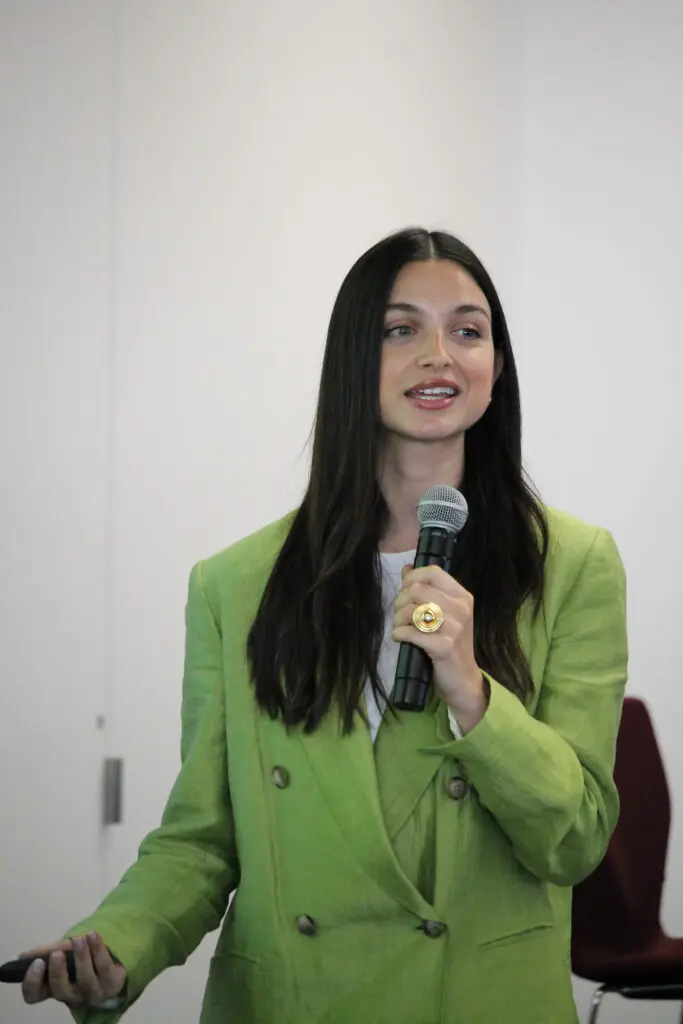
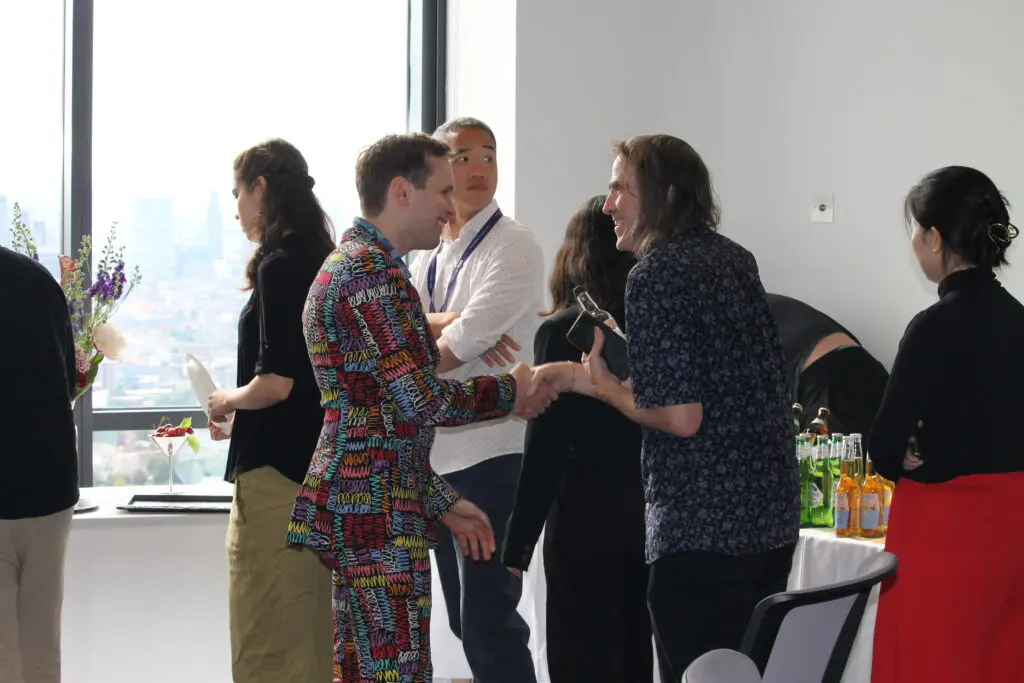
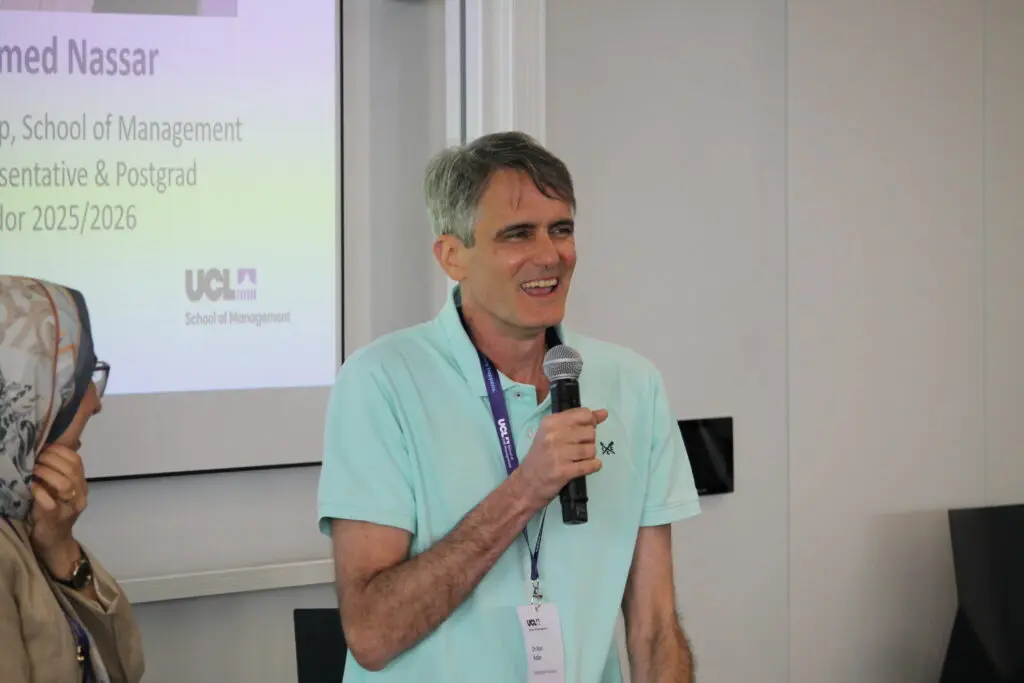
All images provided by UCL.
The role of partnerships
Events like this do not succeed in isolation. They are shaped by collaboration between organisations that bring different strengths to the table.
Universities play a critical role in generating ideas, talent and research-led innovation. But bringing those ideas to market requires a different kind of support – access to networks, practical expertise and pathways to real-world application. This is where partnerships become essential.
At Geovation, partnerships like this are a core part of how we:
- Expand the innovation ecosystem
- Build bridges between research and real-world application
- Support founders beyond the early idea stage
Why partnership matters
What makes this collaboration particularly valuable is its long-term perspective.
By bringing together UCL’s strength in research and early-stage innovation with Geovation’s experience in supporting founders to build and scale, the partnership creates a more complete pathway from idea to impact. It bridges a gap that often exists between academic innovation and real-world application.
For founders, this means access to more than just visibility. It means connection into an ecosystem that can support them as they refine their ideas, test their assumptions and take meaningful steps towards growth.
For partners, it highlights what is possible when collaboration is structured around shared outcomes rather than one-off interactions.
All images provided by UCL.
From pitch to progress: Geovation’s role
As part of the 2026 competition, Geovation contributed a Venture Development Package for the winning teams. This was designed to provide practical, ongoing support after the competition, ensuring that momentum does not stop once the awards have been announced.
This includes:
- 12 months of Geovation ecosystem membership
- Access to technical expertise and founder support
- Connections into a wider network of innovators and partners
The aim is simple but significant: to help teams move from early validation to tangible progress.
Critically, this ensures that winning teams don’t just receive recognition, they gain practical support to continue building after the event.
What stood out on the day
Across the pitches, there was a strong sense of urgency and purpose. Founders were not only identifying problems, but working to address them in ways that were grounded in both innovation and practicality.
What stood out most was the finalists’ ability to clearly articulate the challenges they were addressing. Each team showed a strong grasp of the problem space, which is essential for rigorous innovation and for developing solutions that can move beyond concept into real-world application. Each finalists brought energy, clarity and conviction to their ideas.
Circular economy thinking also emerged as a clear thread across the pitches. Whether through redistributing a green workforce, redesigning building materials, helping farmers manage livestock more efficiently, or reviving a community’s artistic and economic life, the finalists demonstrated how sustainability can be embedded at different stages of a product, service or place-based journey.
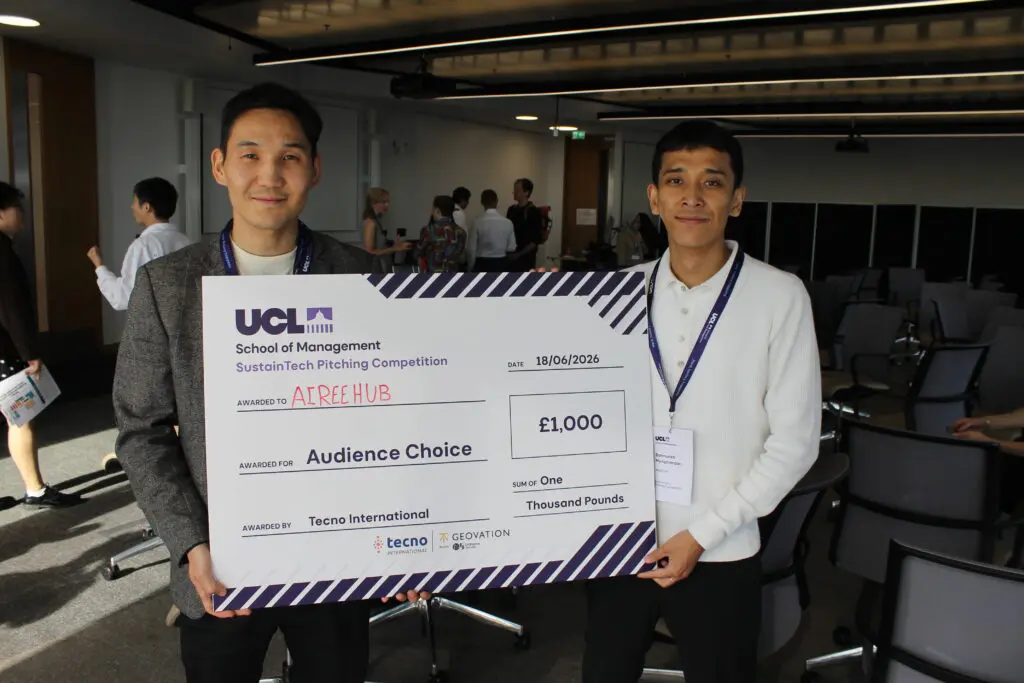
The People’s Choice award, presented to Airee Hub, captured this particularly well, with a proposition focused on making sustainability part of every step of the product journey.
For Geovation, the pitches also highlighted the role location data can play in strengthening circular economy models. From understanding supply chains and workflows to identifying market demand, place-based insight has the potential to help founders refine, test and scale solutions that are both sustainable and commercially viable.
Geovation’s panel segment brought this connection between ideas, experience and ecosystem support to life. Sandro Go, CEO and Co-founder of current accelerator cohort company Emissiv, and Aila Grant, Geospatial Data Scientist and UCL alumna, shared their first-hand perspectives on what it takes to build in sustaintech and approach problem-solving through a geospatial lens. Their reflections resonated strongly with the finalists in the room, whose passion, curiosity and drive reflected the bold sustainability thinking that sits at the heart of Geovation’s work.
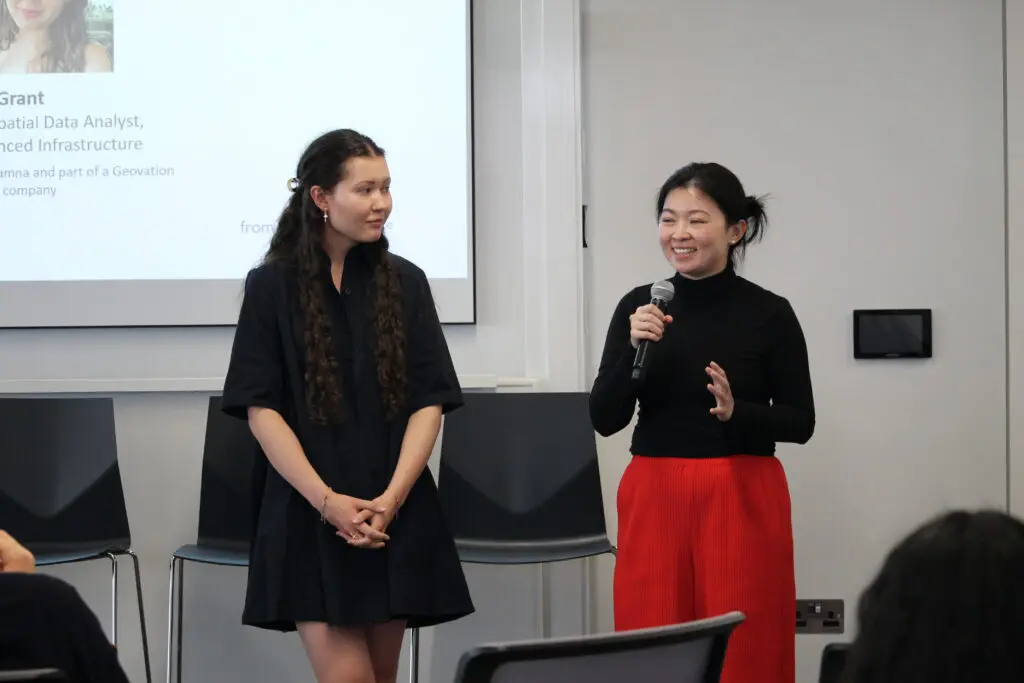
Whether through new approaches to sustainability, the application of emerging technologies, or fresh perspectives on existing challenges, the level of ambition in the room was clear. Just as importantly, there was a willingness from the wider audience -judges, partners and peers – to engage, challenge and support these ideas as they evolve.
All images provided by UCL.
Looking ahead
The SustainTech Pitching Competition is just one example of how partnerships can unlock value across the innovation ecosystem. By aligning around a common goal, to support founders solving real-world challenges, organisations can create opportunities that extend far beyond a single event.
At Geovation, we continue to work with partners across academia, industry and the public sector to build these pathways. Whether through competitions, programmes or community initiatives, the focus remains the same: helping promising ideas turn into scalable, impactful solutions.
If you’re an organisation looking to:
- Connect with early-stage innovation
- Support founders working on real-world challenges
- Be part of a growing ecosystem of collaborators
We’re always open to conversation, please get in touch to find out more.
Curious where ideas like these go next? Meet the start-ups building at Geovation and explore how we support founders beyond the early stages:
- Meet the start-ups
- Learn more about the two-track Accelerator Programme
- Join the community and become an Ecosystem member
Geovation Autumn Showcase 2026


Master Your LinkedIn Strategy