Introducing Cohort 8 | ProxiPal
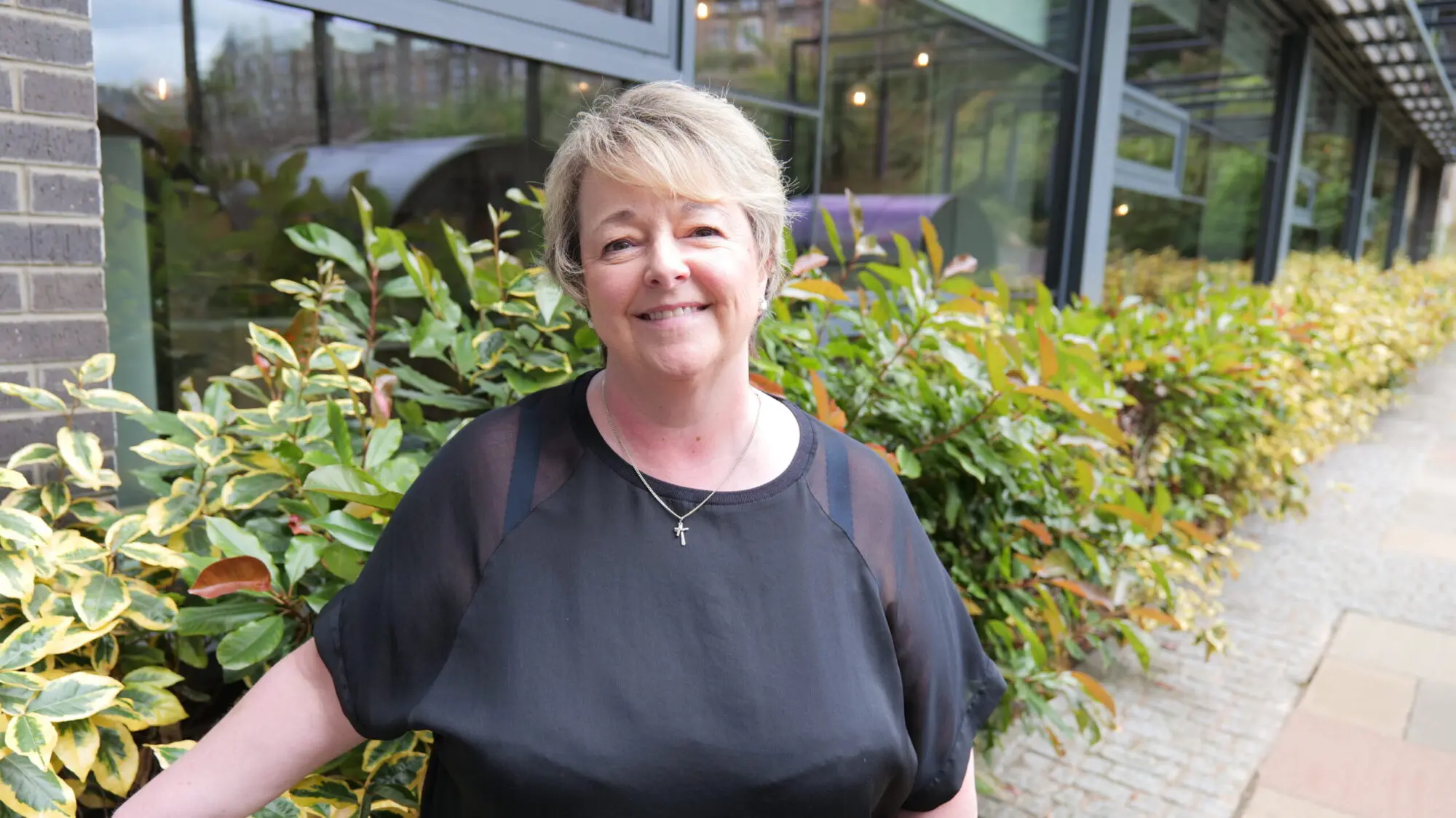
In the next instalment of our meet the founder’s series we introduce the founder behind ProxiPal, Carolyn Blackshaw. ProxiPal are developing their first product Anchor and in this blog, Carolyn explains the inspiration behind the business.
Tell us about your start-up. What problem are you trying to solve, and what’s your unique approach?
Anchor by ProxiPal is a privacy-first digital safeguarding platform designed to intervene at the point of separation, before a vulnerable person becomes missing. Our aim is to move safeguarding technology upstream: from locating someone after they become missing to creating an opportunity to intervene before they do.
Many existing location technologies focus on finding someone after they have already become separated or are reported missing. Anchor takes a different approach: recognising when a vulnerable child or adult moves away from their parent, carer or safe environment and alerting the responsible person early enough to act.
We are developing Anchor around the principle that safety should not come at the expense of dignity, autonomy or freedom. Rather than continuously tracking someone, location technology is escalated only when it is needed, with the technology designed to be discreet and non-stigmatising.
Through our work with Geovation Scotland, we are also exploring how environmental risk, such as proximity to open water, railways and major roads, could inform the urgency of an alert.
Tell us more about the team and your background.
I’m Carolyn Blackshaw, founder of ProxiPal and the nurse behind Anchor. I qualified as a nurse in 1995 and have spent more than 30 years working across health and social care, including older adult mental health, dementia care, care-home management and community services.
My expertise is not in engineering or software development; it is in understanding people, human rights, safeguarding, risk and the realities of delivering care. Throughout my career, I have worked within rights-based approaches that require us to balance safety with an individual’s autonomy, dignity and freedom, using the least restrictive approach wherever possible. Those principles now sit at the heart of how Anchor is being developed.
I also knew from the outset that Anchor could not be built from a single discipline, so I have brought together a multidisciplinary group of people who contribute expertise across engineering and hardware development, product and technology, smart textiles, AI and data governance, and additional support needs education.
That combination is important. Anchor sits at the intersection of technology, safeguarding, human rights and human behaviour, so we need people around the table who understand not only how to build the technology, but how it will affect the people who use it.
As we move towards our first pilots, we are continuing to strengthen the team and build the specialist partnerships needed to take Anchor from an early-stage innovation into a safe, evidence-led and scalable safeguarding platform.
What inspired you to start the company? Was there a personal story behind it?
Anchor grew from two parts of my life coming together.
Throughout my nursing career in dementia and older adult mental health services, I experienced situations where a vulnerable person had left a place of safety and become a missing person. I saw first-hand the fear and urgency that followed for families, carers and professionals, and how quickly risk could escalate once somebody was unaccounted for.
Years later, the issue came back into my life through my nephew Stuart, who is neurodivergent. Through understanding more about the challenges experienced by children like Stuart, I began spending time in UK and US online communities for parents and carers of neurodivergent children.
There I discovered just how many families were living with children who run, wander or leave safe environments, often with limited awareness of danger. Parents described extraordinary levels of vigilance and the constant tension between keeping their child safe and allowing them freedom and independence.
That was the moment the pieces began to connect.
The circumstances were very different from dementia care, but I recognised the same fundamental problem I had seen throughout my nursing career: we often wait until a vulnerable person has become missing before technology helps us respond.
That led to a different question: what if we could intervene at the point of separation instead?
Anchor grew from that question, and from my belief that safeguarding technology should help protect people without unnecessarily restricting their dignity, autonomy or freedom.
What are your goals during the accelerator programme?
Our main goal during the Geovation Scotland programme is to move Anchor from early development to a working first product that we can safely test in the real world.
We are very conscious that the first version will not be the finished product. Real-world testing with families will help us understand what works, what doesn’t, what people actually need and what we need to change before the next stage of development.
Geovation Scotland also gives us an incredible opportunity to develop the geospatial intelligence behind Anchor. We want to explore how location and environmental risk data, including hazards such as open water, major roads and rail infrastructure, can help us understand not simply that a separation has occurred, but the level of risk surrounding that event.
Alongside the technology, our goal is to put the right foundations in place around data governance, privacy, cyber security and safe pilot design.
By the end of the programme, I want us to have moved significantly beyond proving that we can build Anchor. I want us to have begun proving, with real people in real environments, whether it works, how it needs to improve and whether it genuinely makes people safer while supporting their independence.
What has been your proudest moment so far as a founder?
There have been a few moments that have made me stop and realise how far the idea has come.
One of my proudest was giving my first presentation about Anchor at CodeBase Stirling as part of the Techscaler programme. Standing up and talking publicly about something that had existed largely in my own head was a significant moment. It made Anchor feel real.
Since then, I have been incredibly proud, and genuinely humbled, by the people who have chosen to contribute their time, knowledge and expertise to help me develop it. I could never build Anchor alone, and attracting people from very different disciplines who see the potential in what we are trying to achieve has been a huge privilege.
And, of course, being selected for Geovation Scotland was another very proud moment. Being accepted onto a recognised, publicly supported accelerator brings both credibility and responsibility. For me, it was external validation that Anchor is a problem worth exploring and an idea worth developing properly.
Each of those moments has represented the same thing: Anchor moving from something I believed in to something other people believe is worth building too.
How can people support you?
At this stage, one of the most valuable things people can offer us is knowledge, experience and collaboration.
We would love to hear from charities, public-sector organisations, health and social care services, education professionals, safeguarding organisations and others working with people who may be at increased risk of becoming missing.
We are particularly interested in organisations that would like to become part of the journey, helping us understand the problem from different perspectives, challenging our assumptions, contributing to our research and, where appropriate, supporting future real-world testing.
We also want to hear from families and carers with lived experience. Anchor needs to be shaped with the people who may ultimately use it, not simply designed for them.
As we develop the technology, we are equally keen to build relationships with people and organisations working across geospatial data, digital health, human rights, privacy and responsible technology.
Anchor is still at an early stage, and that makes collaboration particularly valuable. If our mission resonates with you, we would love you to come and be part of the journey.