From Idea to Impact: How Feasibly Raised £500k to Transform Renewable Planning

Every year, billions are lost to renewable projects that fail before they start. Geovation Alumni Feasibly is rewriting that story with AI-powered geospatial intelligence—and investors are taking notice.
Feasibly has secured £200,000 in pre-seed funding from PXN Ventures, bringing their total raised to over £500,000, including two Innovate UK R&D grants. This milestone follows a bold rebrand just four months earlier, signalling their shift from consultancy to scalable tech.

Building the AI for Infrastructure That Builds Itself
The UK’s net-zero ambitions are being held back by one of its most stubborn bottlenecks: long, opaque, and failure-prone planning cycles. More than 80% of renewable-energy projects fail during planning, costing an estimated £1.2 billion in wasted investment every year and slowing progress toward climate targets.
Feasibly is tackling this head-on. Their AI-powered geospatial engine transforms months of manual analysis into seconds, giving developers instant answers to complex queries like:
“Find all ten-hectare plots in the North East, within 3 km of a substation, not on protected land.”
By automating the development workflow, Feasibly de-risks projects before millions are spent—unlocking the speed and certainty needed for a Net Zero future.
Co-founder Beth Holloway explains:
We need to scale energy installations rapidly, and that starts with building in the right places. By automating spatial data analysis and communication, key stakeholders in critical infrastructure can communicate instantly.
We are building the AI for infrastructure that builds itself.
The Power of the Geovation Community
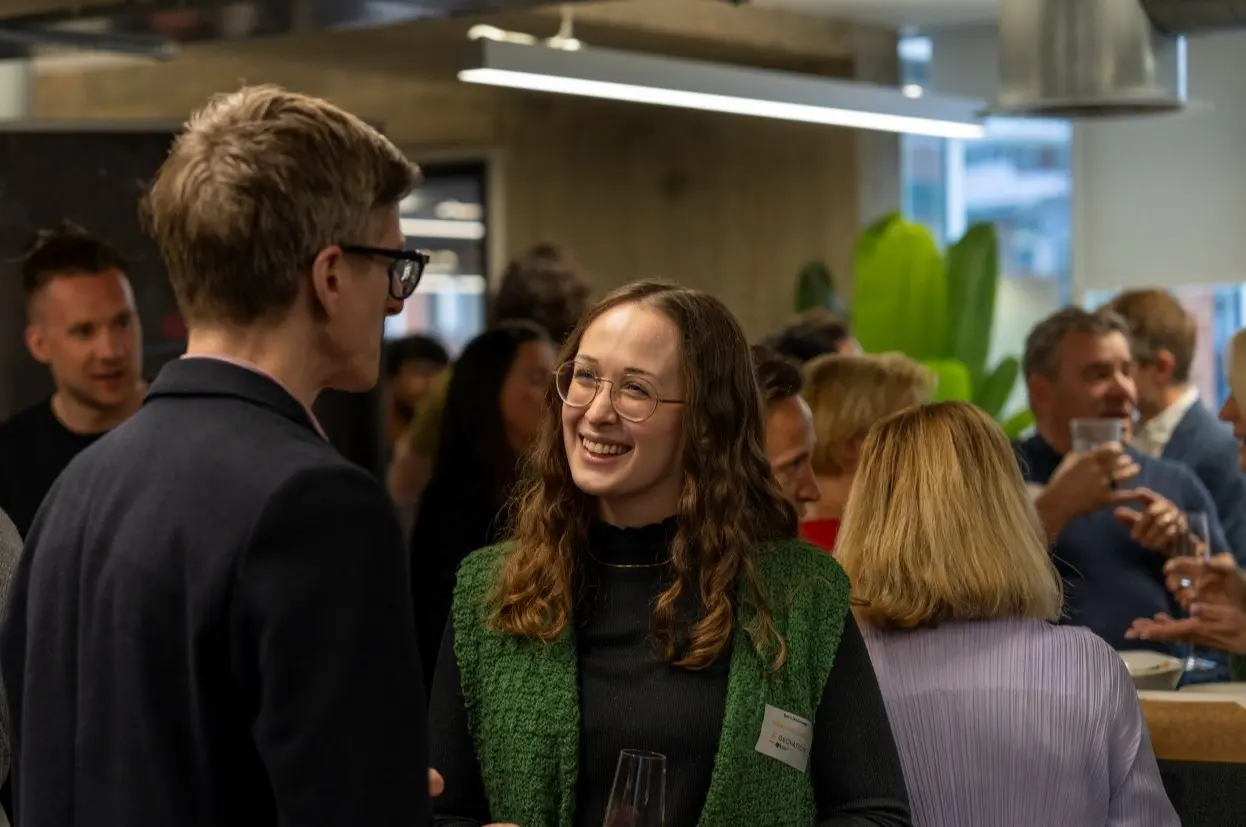
Beth and co-founder Leo Thomson joined Geovation’s 19th Accelerator Cohort in 2024 after two years as a tech-driven consultancy, helping renewable developers navigate complex planning processes. Both founders are Durham University graduates, where their shared interest in sustainability and data-driven problem-solving first took root. After launching their venture through the Durham Venture Lab Accelerator, they spent two years working hands-on with local energy projects—an experience that exposed the painful inefficiencies in planning workflows.
As Leo puts it:
Joining Geovation plugged us into a community that lives and breathes location data. Access to mentors from Ordnance Survey and Land Registry—the people who build, maintain, and understand these datasets at the deepest level—helped us validate assumptions fast and ship faster.
The Geovation office brought something rare: a concentration of top-tier geospatial operators and founders in one room. That environment sped up learning loops, opened doors to domain experts, and sharpened the product in ways that take companies months on their own.

Turning £500k Into Impact: The Next Chapter
With fresh capital and community support, Feasibly is doubling its engineering team and preparing for commercial launch—shipping V0 in the coming weeks.
Their vision? To build the first AI agent for renewable energy developers, enabling full geospatial analysis through natural language prompts and removing technical and human limitations from infrastructure planning.
Follow Feasibly’s journey through securing new investment and rebranding.

Driving Innovation Through Location Intelligence
Feasibly is one example of how startups in the Geovation Accelerator Programme are tackling complex challenges through the power of location intelligence. From advancing Net Zero goals and promoting healthier digital habits, to creating safer walking routes and improving emergency response, these innovators share a common mission: using data-driven insights to reduce risk, accelerate decision-making, and unlock opportunities for transformation.
The Geovation Accelerator Programme is designed to make this possible. By providing access to critical datasets, expert mentorship, and a collaborative ecosystem, we help founders turn bold ideas into real-world impact.
Explore Geovation’s award-winning Accelerator Programme.